
● NO-BS SEO FOR E-COMMERCE
Be There When They Are Ready To Buy!
You didn’t build an ecommerce brand just to be an ad account with a checkout. If every sale needs a boosted post, you’re not scaling, you’re renting growth. We use SEO to turn your store into the one thing giants hate fighting: a brand that prints organic demand without asking algorithms for permission.
TRUSTED PARTNERS
Expertise You Can Trust
Help shoppers find your product first
- More visibility in product and category searches
- Re strategize collection pages for buying intent
- Clean up technical issues that hold product visibility back
- SEO plan for filters, variants, descriptions, and internal links
- Content mapping to help shoppers land on the right product faster
- More organic sales without relying only on ads
Request an Ecommerce SEO Review
We’ll check your store structure, product visibility, and organic search opportunities.
PPC VS SEO
Why SEO Outperforms Paid Ads Long-Term
Metric
PAID ADS (PPC)
ORGANIC SEO
Average ROI
4x
8x (and it compounds)
Time to Positive ROI
Immediate (but plateaus fast)
6-12 months (then it moons)
Cost Per Lead
$50-$150+
39% lower than outbound
Traffic Longevity
Dies when budget dies
Keeps running 24/7/365
Conversion Rate
1.7% (outbound average)
14.6% (organic leads)
SHOPIFY E-COMMERCE
Your Competitors Are Converting 14.6% Of Organic Visitors Vs. Your 1.7%
You launched your e-commerce store with fire in your belly. You had the product. The branding was clean. The Shopify theme? Chef’s kiss. You dropped some cash on Meta ads, maybe even ran a couple influencer collabs. Your CAC is through the roof. You’re burning $3 to make $2. Every sale feels like you’re donating to Zuckerberg’s metaverse fund. Traffic started rolling in & then… crickets. Meanwhile, Amazon’s sitting pretty at the top of every single product search like they own the damn internet (they kinda do). That’s how E-Commerce SEO in 2026 looks like.
01
You're Fighting With One Hand Tied Behind Your Back
Amazon has 2.5 billion backlinks. Their domain authority is 96/100. They have entire teams dedicated to SEO, conversion optimization, and making sure their product pages load faster than your TikTok feed.
02
Your Product Pages Are Invisible
70% of e-commerce searches are transactional. People are typing “buy wireless earbuds,”. Your competitors are using structured data so Google shows star ratings, pricing, and stock status directly in search results.
03
You're Spending Money on Paid Ads (Calling It "Marketing")
We love paid ads. They’re great for quick wins and testing new products. But we hate it when PPC stops working the second you stop paying. And SEO? That’s your long-term wealth-building asset. It’s the difference between renting attention and owning it.
Who This Is For (And Who It's Not For)
The E-Commerce playing field isn’t level. It’s a damn cliff.
We're a GOOD fit if:
- You're spending $5K-$50K/month on paid ads and want to diversify
- You're tired of fighting for scraps on Amazon and want to own your traffic
- You're ready to invest 6-12 months to build a real asset
- You want a partner who speaks human, not "SEO guru" nonsense
This is NOT for you if:
- You're expecting "Page 1 in 30 days" miracles
- You're looking for the cheapest option
- You're not willing to invest in content creation
- You want to "try SEO for a month and see"
- You think SEO is just "adding keywords" to your site
SEO Growth
What Happens on the
"SEO Audit" Call With Us
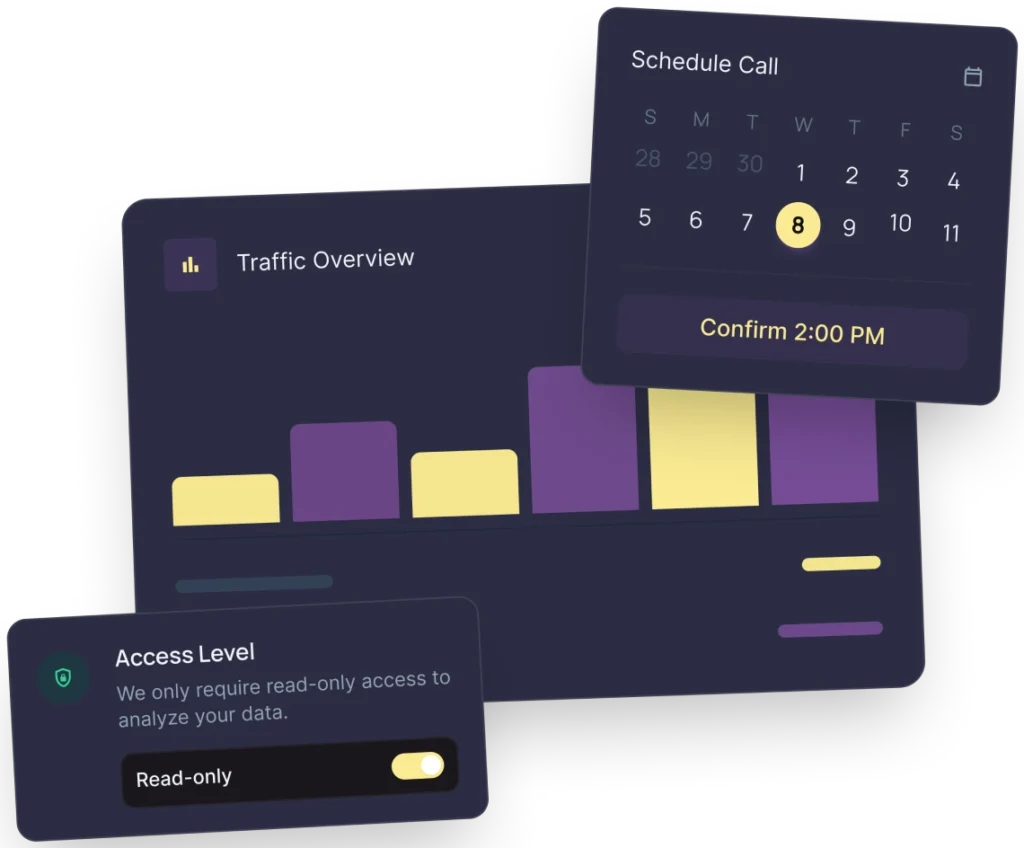
This is the starting point between your Startup and We Do SEO. No retainers, no 20-page pitch deck. Here’s what happens:
We ask for read-only access to your analytics + Search Console + platform (Shopify/Woo/etc.) if you’re comfortable.
We walk through: where organic traffic lands, which pages contribute real money, which parts of your store are ghosts in Google’s eyes.
We point out 2–3 blunt, high-ROI changes you could make, even if you never talk to us again. We answer the only questions that can help your brand.
SEO Services
Custom Strategies, Zero Cookie-Cutter BS
1. Technical SEO Not just "add alt text to images"
We are talking about: Site speed optimization, mobile-first indexing, structured data implementation, javaScript rendering fixes, canonical tags, crawl budget optimization. This is the foundation. Without it, everything else is just window dressing.
2. Human Written Content Not AI Slop
We only have one type of content.”Commercial-intent content” that intercepts buyers at every stage: Product comparison pages, buyer guides, how-to content, product education, Industry insights, trend breakdowns. A complete content marketing strategy because 61% of US shoppers make purchases based on blog recommendations.
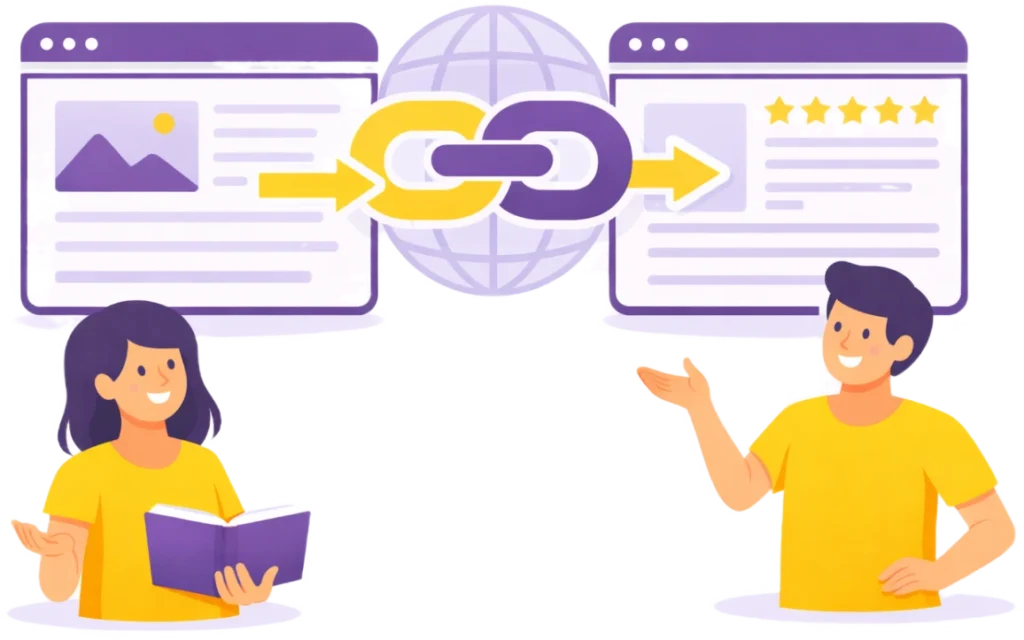
3. Link Building That Doesn't Get You Penalized
Backlinks are still the backbone of SEO. But if “some SEO agency” is buying links from sketchy PBNs or spamming blog comment sections, the brand is toast. But the real one gets your brand featured on "Where to Buy" pages, do digital PR across data studies, expert roundups, arrange product reviews from legit publications. This is how we build domain authority that makes every page on your site rank better.
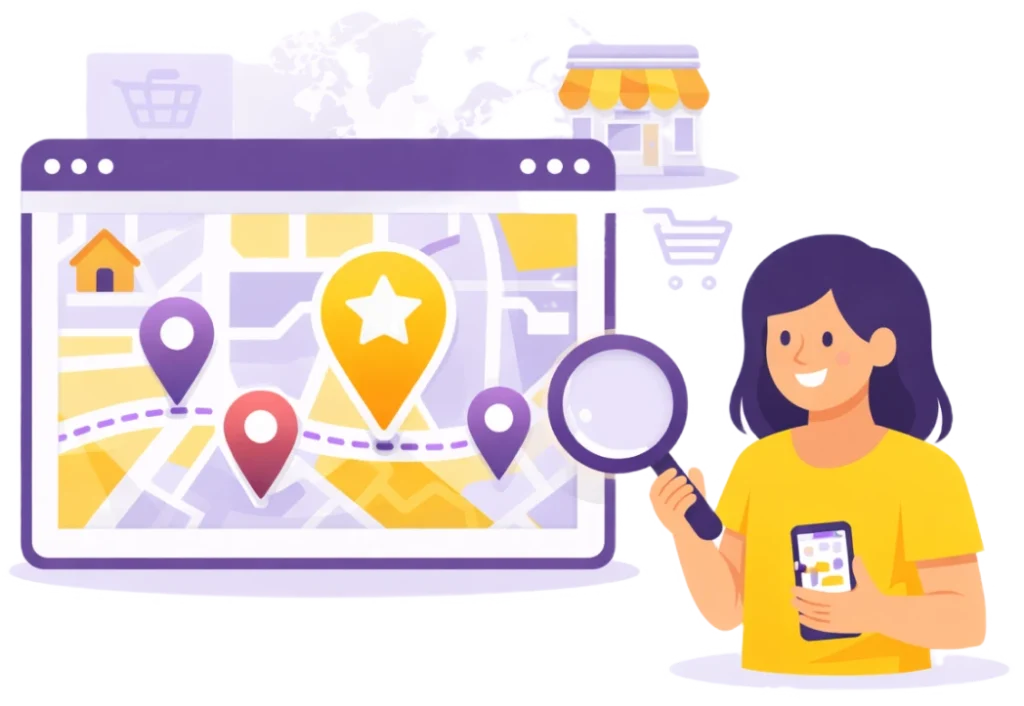
4. Local SEO (Yes, Even for E-Commerce)
If you have a physical location, a warehouse, or even just want to dominate "near me" searches in your target cities, local SEO is valuable. Think: "organic skincare near me," "custom furniture NYC," "same-day delivery running shoes Boston." This is especially clutch for D2C brands trying to compete with Amazon's "delivered today" flex.
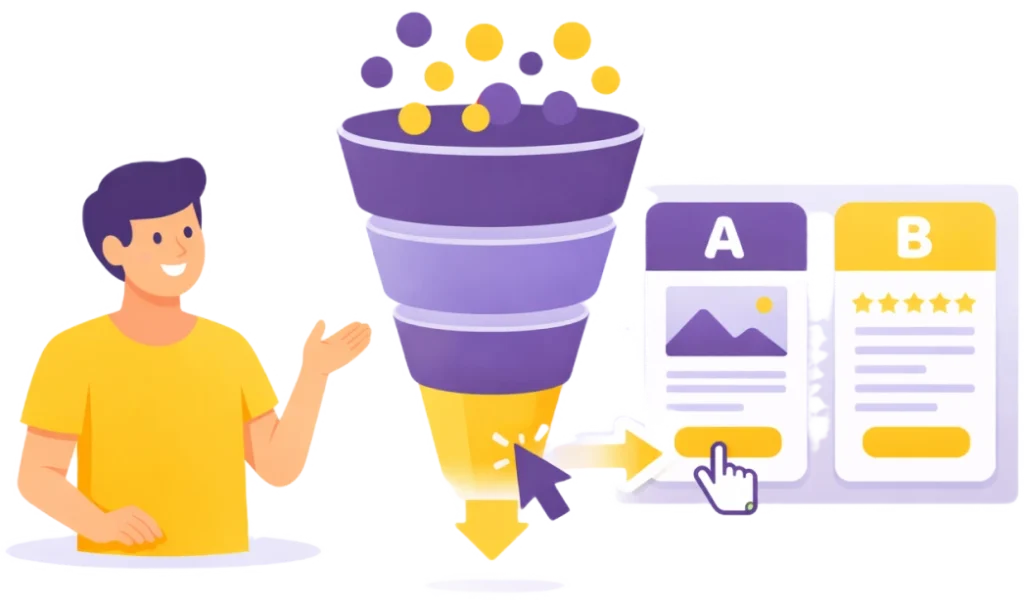
5. Conversion Rate Optimization (Because Traffic ≠ Revenue)
You can rank #1 for every keyword in your niche. But if your product pages convert at 1%, you're still broke. We do it differently with A/B testing product page layouts, optimizing for mobile UX (because 68% of your traffic is mobile), Improve page load speed, add trust signals (reviews, badges, guarantees), and reduce friction in checkout (one-click buy, guest checkout, multiple payment options).
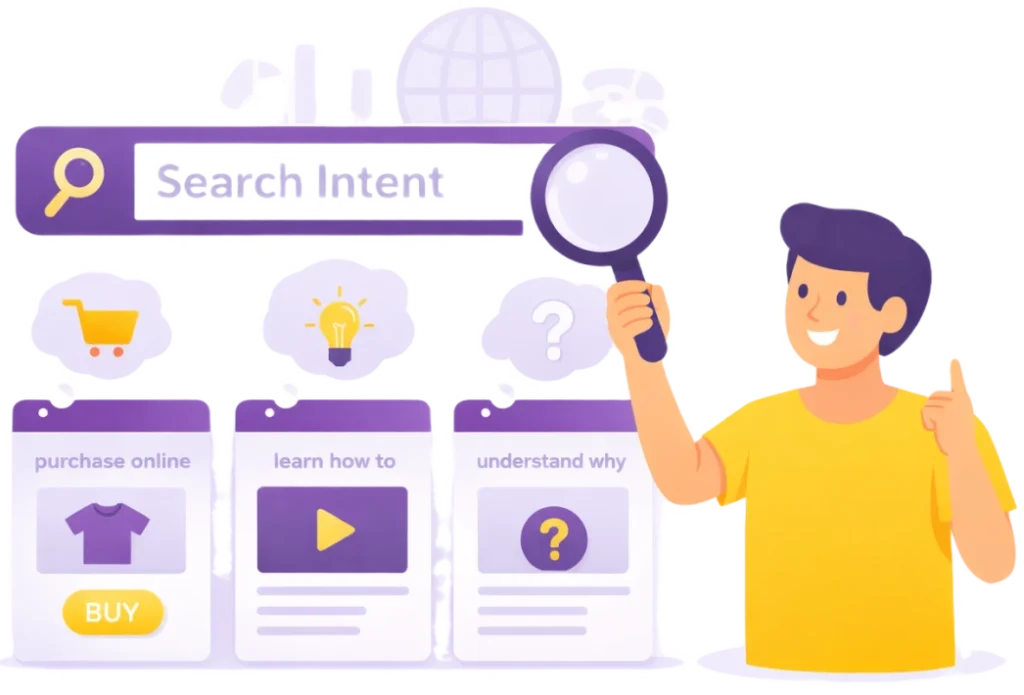
6. Search Intent (We Don’t Fly Blind, We Read the Room)
SEO without data is just wasting time. We wire everything up; including deep GA4 + Search Console tracking, pulling search terms your buyers use and folding them back into category, product, and content strategy. We spot pages already bringing money organically and turning them into full-blown money printers.
7. Roadmapping & Experimentation
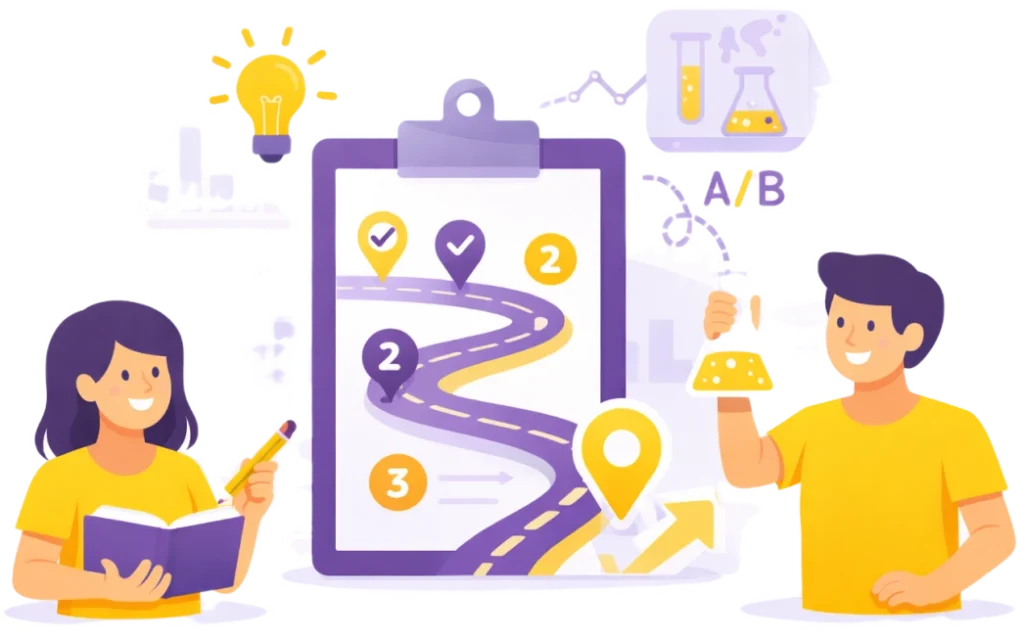
Search engine optimization is built on long-term planning, not a once-and-done job. That’s why our clients don’t end up stuck with the same rankings, same CR, same revenue ceiling for 18 months straight. We build a quarterly test roadmap for your key money pages (categories, PDPs, key content), run controlled experiments on titles, layouts, internal links, offers, and schema, and kill anything that doesn’t shift CR, RPV, or qualified traffic.
KPI-BASED MARKETING
We Execute With KPI-Based Marketing Not "Impressions" & "Keyword Rankings"
E-commerce SEO is not a weekend project. It’s not something you can “figure out” by watching a few Neil Patel videos and reading a Shopify blog post. The landscape is too competitive and the technical requirements are too deep.
We don’t have “packages.” We don’t have “bronze, silver, gold” tiers. Why? Because your business isn’t the same as the last Shopify store we worked with. Your competition is different. Your product margins are different. Your target customer is different.
SO WE BUILD CUSTOM SEO STRATEGIES BASED ON:
Your Revenue Goals
Your revenue goals (not vanity metrics like "traffic")
Your Customer Journey
Your customer journey (what they're searching for at each stage)
Your Competitive Landscape
Your competitive landscape (who's ranking, how they're ranking, where the gaps are)
Your Resources
Your resources (budget, team size, internal capabilities)
Our Process
Our Game-Changing Strategy for Ecommerce Businesses
We understand the process of organic traffic and know how to effectively optimise your website to achieve top rankings in the major search engines.
12-MONTH ROADMAP
What Working With "WE DO SEO" Looks Like
Foundation & StrategyMONTH 1-2
Full technical SEO audit ✅ Competitive analysis ✅ Keyword research & content mapping ✅ Site architecture optimization✅ Schema markup implementation ✅
Content & Authority BuildingMONTH 3-6
✅ High-converting product page optimization ✅ Commercial-intent blog content ✅ Link acquisition ✅ Local SEO setup (if applicable)✅ Ongoing technical monitoring & fixes
Scaling & DominationMONTH 6-12
Expand keyword coverage ✅ Create content hubs ✅ Build more backlinks ✅ Optimize for AI Overviews & featured snippets ✅ Continuous A/B testing & CRO improvements ✅
Compounding Returns
MONTH 12+
- Your domain authority is climbing.
- Your rankings are solidifying.
- Your content is ranking for hundreds of keywords you didn't even target directly.
- Organic traffic is pouring in. Conversions are up.
- You're not paying for every click anymore.
Why You Need SEO More Than Ever
Okay, let’s address (elephant in the room) : AI search. Google’s rolling out AI Overviews. ChatGPT is answering shopping queries. Perplexity is spitting out product ideas. Every second LinkedIn post is screaming “SEO is dead.” No, SEO isn’t dead. Lazy, surface-level SEO is dead. AI might steal some top-of-funnel window shoppers. The bottom-of-funnel, ready-to-swipe-card traffic is still wide open for brands that do organic properly.

1. AI Still Eats From the Same Table: the Open Web
This might sound shocking at first but yes "AI Overviews" are built on content that already lives on real sites. If your site is: technically broken, thin on content, or completely misaligned with real buyer intent, you’re not just losing blue-link clicks, you’re also invisible as a source for anything AI wants to pull from. Solid organic SEO (clean architecture, crawlable pages, strong topical depth, commercial-intent content) is how you make your brand visible to both humans and AI tools. If you’re weak there, it doesn’t matter what Google or OpenAI launch next, you’re not in the room anyway.

2. Most “Ready to Buy” Searches Still Look Like Normal Google Search
Yes, AI Overviews are real. Yes, some categories took a hit. But people still type their queries like: “best (product) for (very specific problem)”, “(brand) vs (brand) (category)”. They still click organic results when they’re ready to buy. That’s where organic SEO still helps you print cash: your category pages, your PDPs answer even the messy questions people type, your content funnels them back to high-intent pages instead of dumping them on random blogs.

3. Organic Is the Only Channel That Lowers Your Dependence on Paid
Paid is getting more expensive, more volatile, and more dependent on platform mood swings. While organic SEO compounds over time, it keeps working when CPMs spike, and it lowers your blended CAC if you commit to it too much. You need organic search that’s built for humans who are ready to buy and you need pages that load fast, structure, content, and a site that’s easy to crawl, trust, and rank.
Why "Doing SEO Yourself" Is Costing You More Than Hiring an Expert
Let’s do the math.
Cost of DIY SEO
- Your time: 20-40hours/week to learn, execute, and manage SEO
- Your hourly value as a founder: Let's say "$200/hour (conservative)
- Total weekly cost: $4,000 - $8,000 in opportunity cost
- Monthly cost: $16,000 - $32,000
The Smart Choice
Hiring an SEO agency for
- Has 10+ years of experience
- Has done this for hundreds of e-commerce brands
- Knows what works (and what's a waste of time)
- Can execute 10x faster than you
- Frees you up to focus on running your business
DISCOVERY PROCESS
Ecommerce Success with SEO
Book a Strategy Call
You book a free strategy call
(30-45 min, no strings attached)
We audit your current situation
(what's working, what's broken, where the opportunities are)
We show you the roadmap
(what we'd do, why we'd do it, and what results to expect)
You decide if it makes sense
(we're not gonna beg you to work with us, either you see the value or you don't)
Now You Have Two Options!!
Keep doing what you're doing.
- Keep burning cash on paid ads.
- Keep watching Amazon dominate your category.
- Keep hoping "things will get better."
Result: Zero compounded growth
Build an SEO moat.
- Invest in the one marketing channel that compounds over time.
- Rank for hundreds of keywords. Own your traffic.
- Stop renting attention from ad platforms.
- And in 12 months, look back and wonder why the hell you didn't start sooner.
Platforms We Specialize In
Shopify & Shopify Plus
Most of our ecommerce SEO work lives here; collections, faceted nav, apps, and theme issues that affect crawl, indexation, and revenue.
WooCommerce (WordPress)
For stores that started as “just a site” and turned into a real brand. We fix bloated plugins, weird URL structures, and slow, overbuilt themes.
BigCommerce
Solid for scaling stores. We make sure your category architecture, filters, and content are set up to win competitive product SERPs.
Headless / Custom Stacks
React, Next, custom builds… our SEO experts and pro devs make sure your fancy frontend doesn’t break SEO under the hood.
Industries We Have Worked In
SEO isn’t one skill. It’s a bunch of different fights depending on the industry. A real estate site isn’t competing like a law firm. An HVAC business doesn’t win the same way a doctor does. Different intent, different pages, different trust signals, different conversion psychology.
Real Estate
Real estate SEO is a local intent fight where Google rewards structure, freshness, and trust. We build and run property + city pages that match how buyers search, semi-duplicate listings pages, and even “near me” discovery. The goal isn’t traffic. It’s qualified calls and viewings from serious searchers.
Lawyers
Legal SEO is high-stakes and trust-heavy. Searchers are stressed, urgent, and comparing fast, so your practice-area pages must answer intent immediately and make you feel credible in seconds. We focus on case-intent queries, conversion-first layouts, and authority signals that reduce hesitation and drive calls, not “reads.”
HVAC
HVAC SEO is pure demand capture. People search when something breaks, the weather flips, or they need “same-day” help. We build service and service-area coverage that matches emergency intent, clean up technical issues that bury local pages, and optimize for calls on mobile where most HVAC decisions happen.
Doctors
Medical SEO is built on clarity and trust. Patients search symptoms, treatments, recovery timelines, and “best clinic near me” when anxiety is high and patience is low. We create treatment pages that answer real patient questions, strengthen local visibility, and add credibility signals so the next step becomes simple: booking.
SaaS / B2B Software
SaaS SEO is all about capturing problem-aware and solution-aware intent, then converting it with proof. We build feature, use-case, and comparison pages that match real evaluation behavior, strengthen internal linking to money pages, and create content that earns demos, trials, and pipeline, not time-on-page.
Dentists
Dental SEO is local trust plus procedure intent. Searchers want confidence fast: pricing expectations, pain/recovery answers, and “near me” availability. We build service-area coverage, procedure pages that reduce fear, and reputation signals that drive calls and bookings. The win is appointment volume and chair utilization.
Restaurants / Cafés
Restaurant SEO is discovery and decision speed. People search “near me,” menus, timings, delivery, and “best” lists when they’re already hungry. We optimize for local pack visibility, menu indexation, and trust signals (reviews, photos, FAQs) so you show up, look obvious, and get chosen in seconds.Real estate SEO is a local intent fight where Google rewards structure, freshness, and trust. We build and run property + city pages that match how buyers search, semi-duplicate listings pages, and even “near me” discovery. The goal isn’t traffic. It’s qualified calls and viewings from serious searchers.
Construction / Contractors
Contractor SEO is reputation, locality, and project proof. Searchers want capability, timelines, and examples before they reach out. We structure services by type and location, publish portfolio-style pages that rank, and build trust with clear process and proof. The target is qualified leads, not tire-kickers.
Frequently Asked Questions
How long does ecommerce SEO take to work?
Most stores see early movement in ~3–6 months, with stronger compounding gains over 6–12 months depending on competition, site health, and how many “money pages” you have to build/upgrade.
What’s included in ecommerce SEO services?
We do the stuff that moves revenue: technical fixes (crawl/index, speed, duplicates), category + product page optimization, commercial-intent content (comparisons/guides), authority building, and tracking/reporting tied to revenue.
Is ecommerce SEO different from “regular” SEO?
Yes. Ecommerce SEO lives and dies on site architecture, category/collection pages, product variants, faceted navigation, duplicate content control, and structured data, plus making sure Google can understand product info like price/availability/reviews.
What pages should we prioritize first for fastest ROI?
Start with collection/category pages, your top-selling product pages, and high-intent search terms (comparison, “best for…”, “near me” if relevant). Most stores waste months writing blogs while their money pages stay weak.
Do product pages need schema (structured data)?
If you want rich results (price, stock, ratings, shipping info), yes. Product structured data helps Google understand your products and can unlock richer visibility across Search/Images/Lens.
Do we need Google Merchant Center for organic visibility?
If you want eligibility for free product listings / Shopping surfaces, Merchant Center + a clean product feed is a big lever (especially for ecommerce). It’s not “paid ads”, it’s organic product visibility when set up right.
Why do ecommerce stores struggle with duplicate content?
Variants, filters, collections, and “sort by” URLs can generate tons of near-duplicate pages. Fixes usually include canonicals, indexing rules, clean internal linking, and crawl budget control so Google picks and ranks potential pages.
Does site speed impact ecommerce SEO?
Yes, because slow pages hurt both rankings and conversions. Google uses Core Web Vitals, and ecommerce is especially sensitive on PDPs and checkout journeys.
Is link building still important in 2026?
Yes, but only the clean kind. Real placements, digital PR, legitimate mentions, and relevant links beat spam every time. Sketchy link tactics are how brands get cooked long-term.
How do we measure ecommerce SEO success without vanity metrics?
Track organic revenue, revenue per landing page, non-brand high-intent rankings, assisted conversions, and conversion rate by organic landing page, not just traffic. SEO should be accountable to business outcomes.
So If You Are Ready, Book Your Free E-Commerce SEO Strategy Call
Or hit us up on social channels
P.S
Still on the fence?
Ask yourself this: What’s your CAC right now? What’s it gonna be in 6 months if you keep relying on paid ads?
Yeah. That’s what we thought. Book the call.
Find Out What’s Blocking Your Website From Ranking
Get a free SEO audit tailored to your business and discover the hidden issues stopping your website from ranking on Google. We’ll analyze your site’s performance, search visibility, technical SEO, content structure, and user experience to uncover opportunities for more traffic, better rankings, and higher conversions. Fill out the form and receive actionable insights to help your business grow online.